The Nicola Naturalists organized the 27th Christmas count in the Merritt count circle, on Saturday 20th December 2025. The weather was fine and Nicola Lake was mostly ice-free as were some other water bodies. We had 21 field participants and 4 feeder watchers and at the end of the day tallied 59 species and 3,905 birds (both slightly under the averages of 62 species and 4,172 birds). We added two more species in the Count Week.
To see the full 2025 count results click here: Merritt Xmas Count data 2025
For the full 27 years of data (3-page pdf) click here: Merritt Xmas Count data 1995-2025

Nicola Lake on Saturday 20th December 2025 – calm and ice-free made for ideal conditions here. Photo: © Dawn Brodie

The group covering southern Nicola Lake hard at work. Photo: © Dawn Brodie
We found three species that were new for Merritt Christmas counts: Snow Goose (1), Dunlin (6) and a hybrid Mallard x Red-crested Pochard (1).

This Snow Goose was the first ever for a Merritt Christmas Bird count. It was with Canada Geese on Nicola Lake. Photo: © Dawn Brodie.

Three of the six Dunlin found at Nicola Lake on the Merritt Christmas count, foraging among Green-winged Teal. Photo © Dawn Brodie
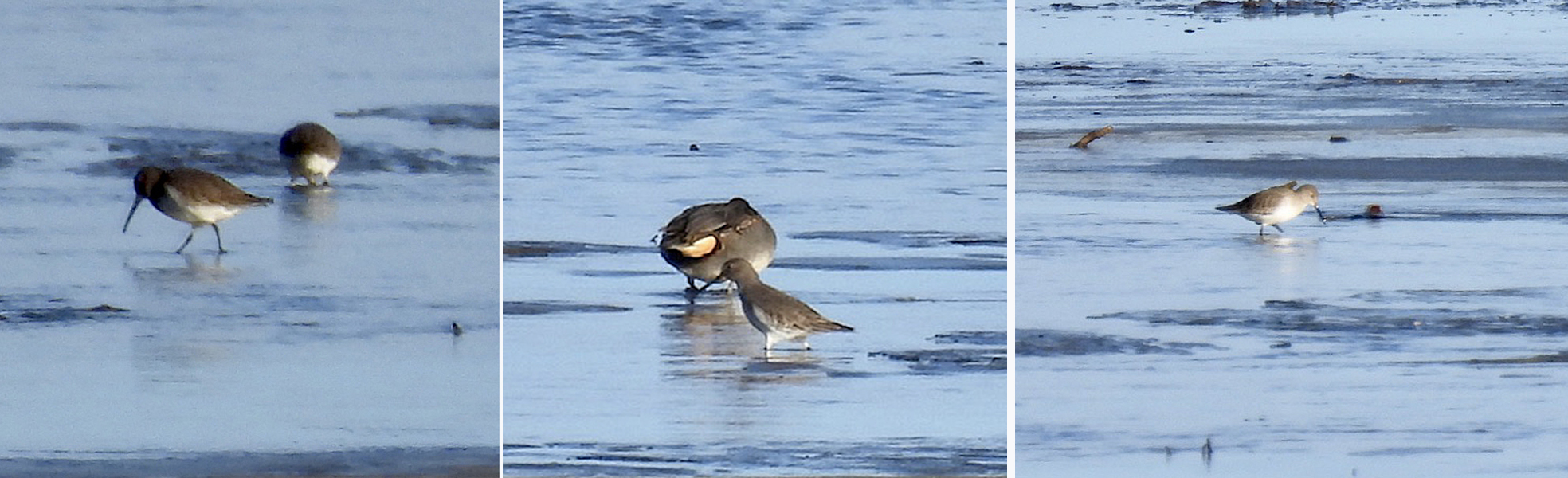
Dunlin at Nicola Lake. Dunlin were also found on the Kamloops CBC on the day after the Merritt count, and they might all have been driven inland by the extreme winds preceding these counts. They are common on the B.C. coast in winter but rare inland at this time. Photos © Dawn Brodie

This hybrid Mallard x Red-crested Pochard (top bird) spent weeks in the Nicola River in the early spring of 2025 and was back again in time for the Merritt Christmas count. The other bird, for comparison, is a female Mallard. Red-crested Pochards are a Eurasian species but are often kept in captive waterfowl collections in the U.S., which is probably where this bird originated. Photo: © Paul Willms
Several species were found this year that had only been reported two or three times before in a Merritt CBC: Northern Shoveler, American Three-toed Woodpecker, Yellow-rumped Warbler and White-throated Sparrow. Three Northern Shovelers were found, but the others in this list were singletons.

This female American Three-toed Woodpecker was found on Mill Creek Road on 20 December and is just the third to have been recorded on a Merritt CBC. This species is an uncommon year-round resident in the Nicola Valley and surrounding areas. Photos: © Alan Burger

This Yellow-rumped Warbler is just the third to be recorded in a Merritt CBC. This is a very common summer breeder in the Nicola Valley but one doesn’t expect them in the depths of winter. Photo: © Paul Willms.

This handsome White-throated Sparrow was only the second to be found on a Merritt CBC. The first was a single bird in 2015. Photos: © Vic Newton
Several species had notably high counts:
- Canada Goose – a new record high of 1,040 birds (average is 263 birds)
- Trumpeter Swan – near-record 124 birds (record is 129, average is 40)
- Green-winged Teal – near-record 65 birds (record is 67, average is 18)
- Spotted Towhee – record high 18 birds (average is 6)

A few of the Canada Geese found in the Merritt CBC on 20 December. The total of 1,040 is a new record high for this count. Photo: © Dawn Brodie
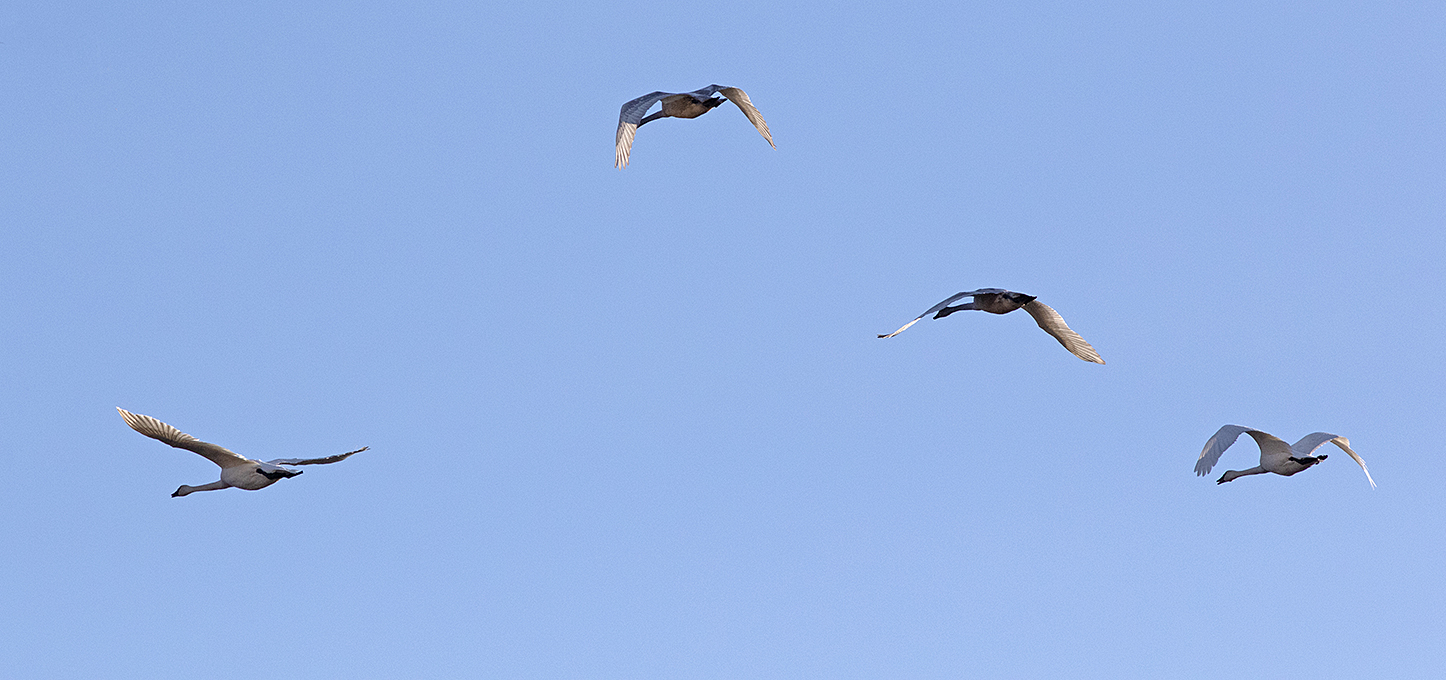
Trumpeter Swans in flight near Nicola Lake. A near-record high of 124 swans was recorded on 20 December. Photo: © Alan Burger
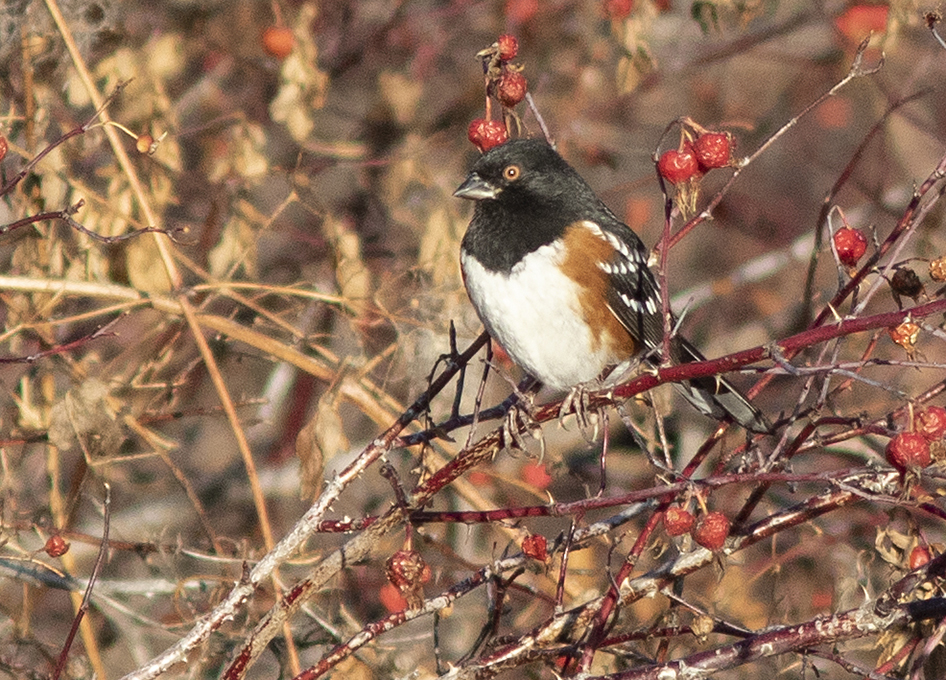
Spotted Towhee – a record high of 18 towhees was tallied on the 2025 Merritt count. Photo: © Alan Burger
As usual, there were a few regular species that were missing on the count day:
- We had neither Greater or Lesser Scaup – found in 16 and 18 of the previous 26 counts, respectively.
- No Sharp-shinned Hawk on count day, but one in the Count Week (found in 17 of the previous 26 count days).
- No Mourning Doves, but two in the count week (found in 25 of the previous 26 counts and usually around 100 birds).
- No Belted Kingfisher (in 21 of the previous 26 counts).
- No Brewer’s Blackbirds (in 17 of the previous 26 counts). Red-winged Blackbirds were also in low numbers (5 compared with the average of 84 birds)
- No Pine Siskins (in 17 previous counts) or Red Crossbills (in 12 previous counts). Other finches, like House Finches and Goldfinches were also in low numbers.

This Sharp-shinned Hawk was photographed in a Merritt yard during the Count Week, on 18 December, but the species was not seen on the count day. Photos: © Corinne Pitt.

Similarly, three Mourning Doves were prominent at a Merritt feeder two days after Count Day, but none was found on the Count Day. Photo: © Bob Scafe
On a more positive note, here are some other notable species found on the Count Day:

These two Common Loons are probably juveniles, lacking strong markings. Five Common Loons were found on Nicola Lake, matching the high counts in several previous years. Photo: © Dawn Brodie.

Northern Pygmy-Owl is always a treat to see, and fortunately a fairly regular species on the Merritt count (14 out of 27 counts). Photo: © Vic Newton.

This is one of two Ruffed Grouse found on 20 December just outside Merritt. This species is a regular on our count, found in 14 previous counts. Photos: © Corinne Pitt.

This male American Kestrel was the lone representative of his species on the Merritt Count. He is often seen on the power lines next to Highway 5A. Photo: © Alan Burger

Three regulars that usually occur in small numbers (L to R): Townsend’s Solitaire, Northern Shrike and Clark’s Nutcracker. Photos: © L to R: Corinne Pitt, Bob Scafe, Alan Burger.

Horned Grebes have occurred on 25 of the 27 Merritt counts, on Nicola Lake. This was the lone bird this year. Photo: © Dawn Brodie.

Northern Harriers. The first two photos are of a female or immature bird (note the white rump – diagnostic for this hawk), and the right photo is an adult male. All in the Quilchena area. Photos: © Dawn Brodie
Introduced species (not native to North America) are increasing in numbers in the Merritt area. Here are two of these species, the third is House Sparrow which had 180 birds this year, almost double the long-term average.
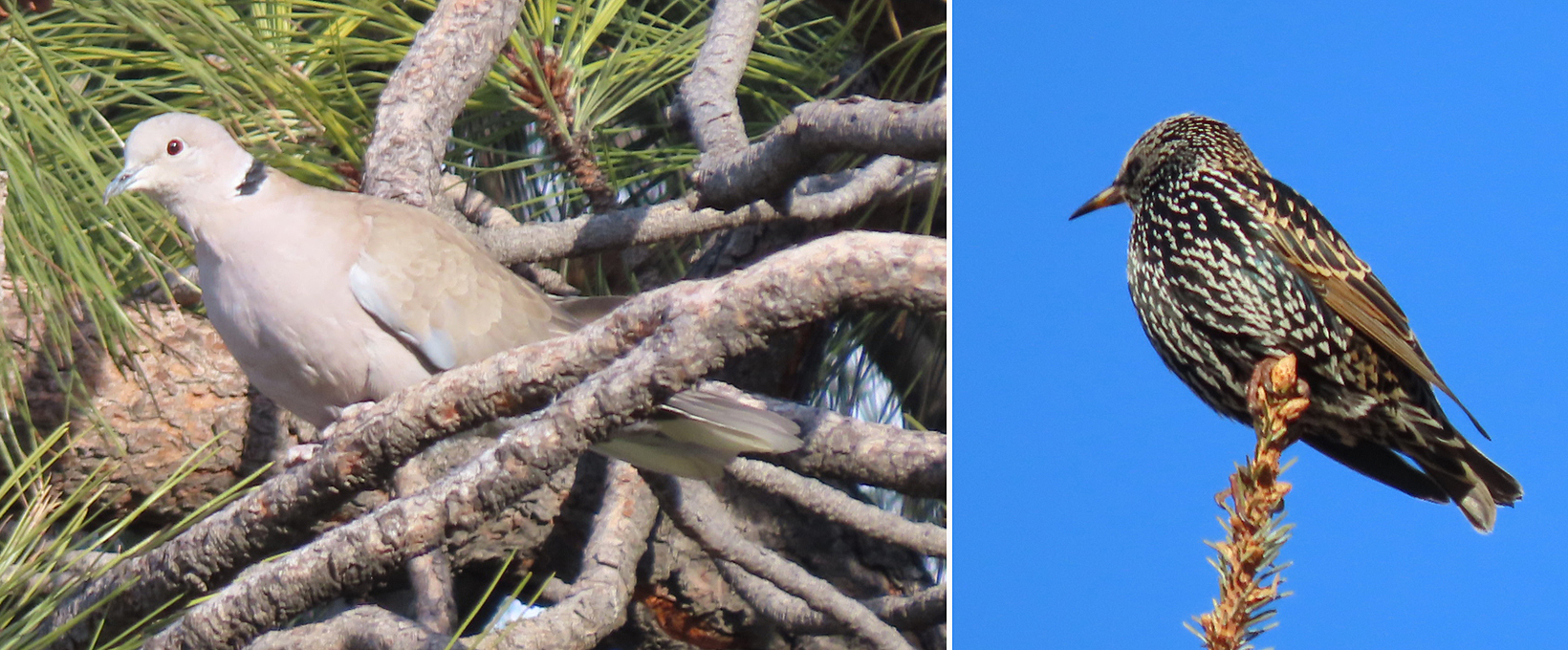
Two introduced species. Eurasian Collared Dove first appeared in the Merritt count in 2009 and has increased in numbers ever since – we had 132 this year (average is 81). The right bird is a European Starling, which is widespread across N. America and in most of the world. We had 317 in 2025 (average is 281). Photos: © Vic Newton.
And to end off, some very familiar species, but always nice to see in mid-winter.

Who doesn’t love chickadees – they are always active and conspicuous, at feeders or in the forest: Black-capped Chickadee (L) and Mountain Chickadee (R). Both are common in the Nicola Valley and are regulars in almost every Christmas Bird Count here. Photos: © Alan Burger
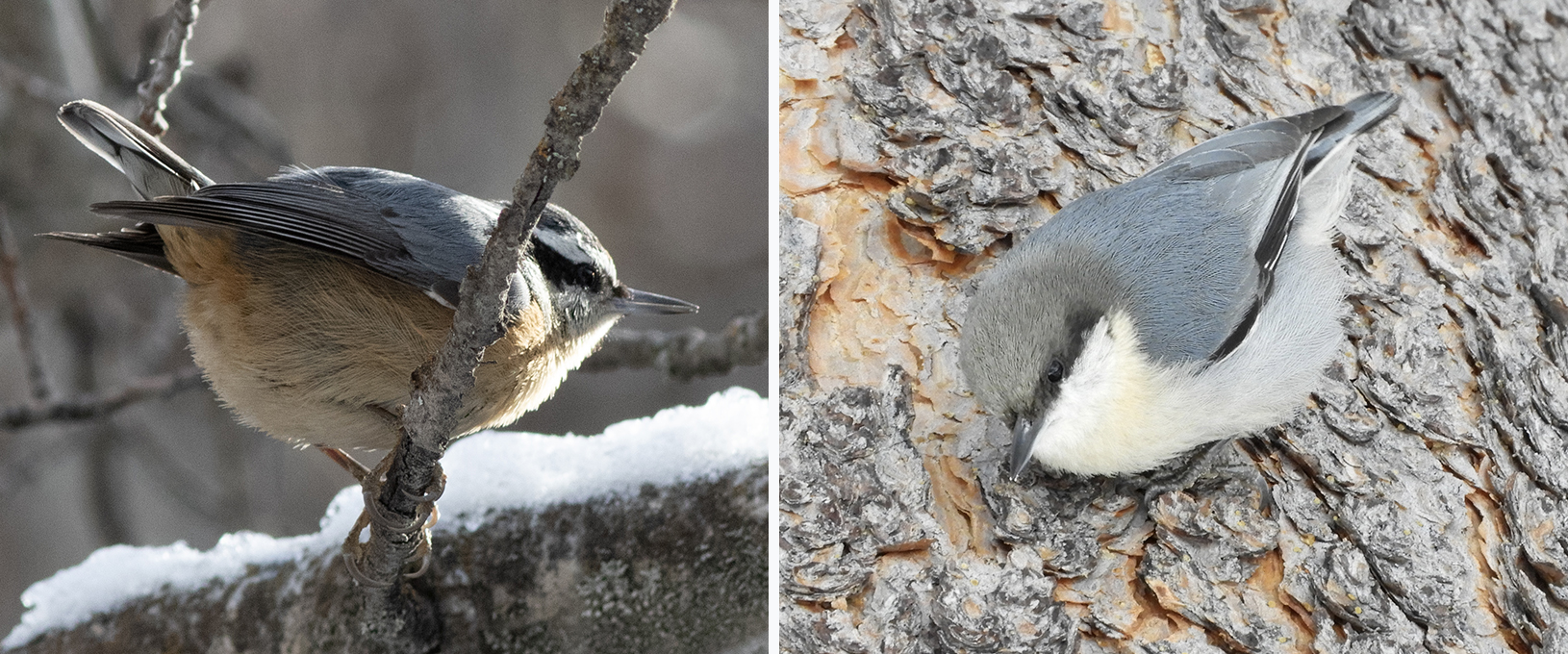
Two regular nuthatch species: Red-breasted Nuthatch (L) and Pygmy Nuthatch (R). Both species hunt for insects in the bark and foliage of big trees. Photos: © Alan Burger.
Thanks to all the participants who made this annual event a success.
~~~~~~~~~~~~~~~~~~~~~~~~~~~~~~~~~
